

Orthorexia

Updated: Aug 12
I remember the days of Orthorexia like they were yesterday. This is probably because, like the volcano in Sicily (very near where some of my family is from), it lies dormant only some of the time. As do most eating disorders.
Interestingly enough, I don’t think Orthorexia has gained much more traction in popular culture than it did when I first learned of it in my early college days. Nor other unspecified eating disorders.
Back then I weighed about 90 pounds. I remember trying feebly to gain weight because I knew how important it was for my health and stamina. But I was complaining about it to people who didn’t see the problem.
One guy, who looked like Channing Tatum and was a junior TA of my exercise science class (can you get more red flags than that) told me I was perfect the way I was, as he stroked my spaghetti size arm on the way to a party where people were jousting in a jello pit. Did I mention Skidmore was a really fun place to go to college? Work hard; play hard.
In case you are wondering, yes, I dumped the Channing Tatum lookalike.
But no, I didn’t gain much weight at the time. I don’t think I did until after grad school. And when that happened, it didn’t take me too long to lose it again (see my first blog post).
Truth is, I’ll never have the thigh gap that I used to have. One savvy gal told me recently that in order to have skinny thighs she’d have to reduce her exercise routine. I was honestly confused at first, until she explained that most strength based exercises make your thighs bigger, not smaller.
Not rocket science, but this rocked my mind. I’d been secretly pining for my high school thighs more than most people pine for a partner.
But I knew instantaneously that she was right. Look at most top shape female athletes. Look at their thighs (okay maybe not too closely). They are not twigs.
And though one of my exes told me I can’t call myself athletic (rude), I believe I am. And plan to remain so. So why am I seeking something that runs contrary to who I am?
I am trying not to use AI (or too much internet) in the making of this blog post, so correct me if I’m wrong. But Orthorexia blew me away when I first heard of it because up until then I thought everything I was doing was healthy, since I knew it wasn’t Anorexia or Bulimia.
But it wasn’t healthy. Or at least I wasn’t. Basically, I created a million rules for myself that if I didn’t follow would send me into a shameful spiral of self-hatred, for being irresponsible or gluttonous. I couldn’t always control my grade-especially in exercise science, my only C (plus). But I could control my discipline with food and exercise habits.
Here are some examples.
-If I ate fruit, I had to wait at least fifteen minutes but preferably a half hour before eating anything else. It was a health fad I heard that I couldn’t shake once I knew of it.
- If I didn’t exercise, I didn’t deserve to eat because I didn’t make space for it.
- If I was eating heartier food, I needed to cut it down into smaller portions in order to slow down and eat less.
This last item may sound reasonable enough but I don’t think it fully relays the backwards intensity I applied to it, and every rule, making them unhealthy, in addition to social hindrances.
Though the details are a little foggy (due to embarrassment), I remember in a group setting trying to cut my pizza slices in half, to slow down the eating process and feel fuller from less. I didn’t expect pizza to offer me much in the way of nutrition. It was a guilty pleasure, so I wanted to dose it out for myself. Only, we didn’t have plates. We also didn’t even get knives. Nobody expected pretension here, at a small town red checkerboard shop that only served pizza. But they weren’t expecting me.
After a sourfaced waitress found me a knife, I tried to cut a couple slices on the lifted tray that everyone was eating from. Turns out the stand wasn’t very stable. Or my knife ~and I~ weren’t sharp enough. The whole thing flipped over, knocking down and breaking several water glasses. This was after a three hour bike ride. Any normal person would’ve shoveled cheese covered carbs into their mouth like nobody's business. Instead I caused a scene.
You see, Orthorexia is not only physically dangerous but extremely difficult to be out and about with. In order to appear “more” normal in social situations (though if you know me, you know I’m far from normal), I’d often crack down on myself the rest of the day, upping my already atrocious rules.
I didn’t want to lose friends, just unnecessary habits. Perhaps this is why it was so difficult to gain weight when I knew I needed to. Because, coupled with the outward or inward reminders I got to stay the same, I didn’t want to break a rule in order to gain a pound. Any uptick would have to come from staying within my rulebook. This was improbable to say the least. Not to mention that every time it did happen, my heart sunk involuntarily. What if 5 pounds turns into 10? 10 into 20? I wasn’t ever worried about a few pound difference, but I was worried about what it boded.
I’ve come a long way since my early days with Orthorexia, but as I mentioned earlier, it’s never fully gone away. I’ve grown to accept this part of myself, like any good therapist, but I also try to account for it. Though I keep a visible scale in my room, I try not to use it too frequently. I’ve never loved math so why obsess over numerical fluctuations other than to fixate on myself in harmful ways?
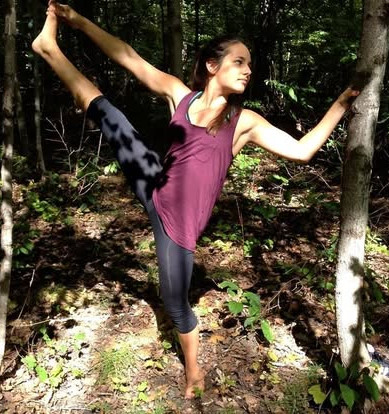
As a yogi, it is not zen to have a million rules for myself that don’t need to be there. Some are key, to ensure we don’t stray too far from healthy routines. But any good yoga-doer needs to be flexible. Life has too much unpredictability for super regimented rules. For example, if I go a whole restaurant shift without eating, my past self would have rather gone to bed starving than nibble on something at a very late hour.
But I’ve also oscillated on the other end of that extreme. I’ve eaten heavy meals out with friends post shift, hunting down places in Boston with open kitchens at crazy hours. Night after night. Of course, this kind of behavior only lasts for so long before I swing back to my more Orthorexic mindset. And the cycle starts up again. A f**cked up metaphorphasis if you ask me, and not one I want to model.
Hence why balance is so key, and the only real thing that’s worked for me. Exceptions are fine. Reactions to the craziness of life. I think deep down we know when we’re truly being unhealthy vs healthy, for ourselves. And it’s okay to not be perfect. I am telling you readers (or crickets) this as much as I am trying to tell myself.
Eating disorders are getting a bit more attention in the media these days due to unfortunate tabloids. It is a scary thing, and now the world is talking. I think it’s time we open up the dinner table to more perspectives, more plates. How is it that Orthorexia still isn’t on the map? How are we confusing unspecified eating disorders for trends?
According to the National Eating Disorders Association (NEDA), “disordered eating” can be constituted by frequent diets, irregular eating habits, and ignoring hunger cues. Unspecified eating disorders outweigh Anorexia and Bulimia and have mortality rates that can be just as high.
If that’s not freaky in a society where almost everyone is on some form of diet or fast, I don’t know what is.
And yes, I did use Google for this paragraph (but still not AI!)


Thank you for sharing this part of yourself, Melinda. A beautiful and healing read 💜
Thank you for writing and sharing this Melinda! I always appreciate hearing your experiences and reflections. I am sorry that you have struggled but admire both your vulnerability and self-awareness in reflecting on it. Very relatable and I’m sure many people will feel seen by your honest writing! Love you!!